

Banking analytics every role can use. No BI team. No SQL. No wait.
Empyrean Reporting: Console™ is a standardized data analytics and dashboarding solution built for financial institutions.
Console provides ready to use dashboards specifically designed for each persona across the institution, refreshed every business day using the data already imported into the data layer.
Trusted by more than 700 institutions





From your data to a decision, in one place
You already have the data. Getting the answers you need from it should not take a week, an IT ticket, or a spreadsheet or report rebuilt by hand. For most institutions it still does. CFOs and finance teams spend 8 to 15 hours each week pulling, formatting and reconciling data for analysis purposes.
Empyrean Console turns that raw data into persona-based dashboards, so executives, product managers and functional leaders get their answers without relying on Finance to source and distribute reports. No dashboards to build, no SQL required, no BI team needed.
Know your numbers before anyone has to ask.
Portfolio composition, credit quality including FICO bands, days past due and risk ratings, concentration views, deposit trends and GL balance trends, with day-over-day, MTD, QTD and YTD comparison and 24 months of month-end trending.
Every leader gets the view built for their job.
Persona-based home pages, pre-built from research with each function: C-Suite Executive, Finance and Accounting, Credit Risk, Commercial Lending, Treasury, Deposit Product Management, Retail and Residential Mortgage.
Get to the drivers of your performance.
Start on a persona home page, move into a detail page for that function’s subject area, then drill into customer, instrument and relationship detail to reach the individual account behind the number.
Stop reconciling the numbers.
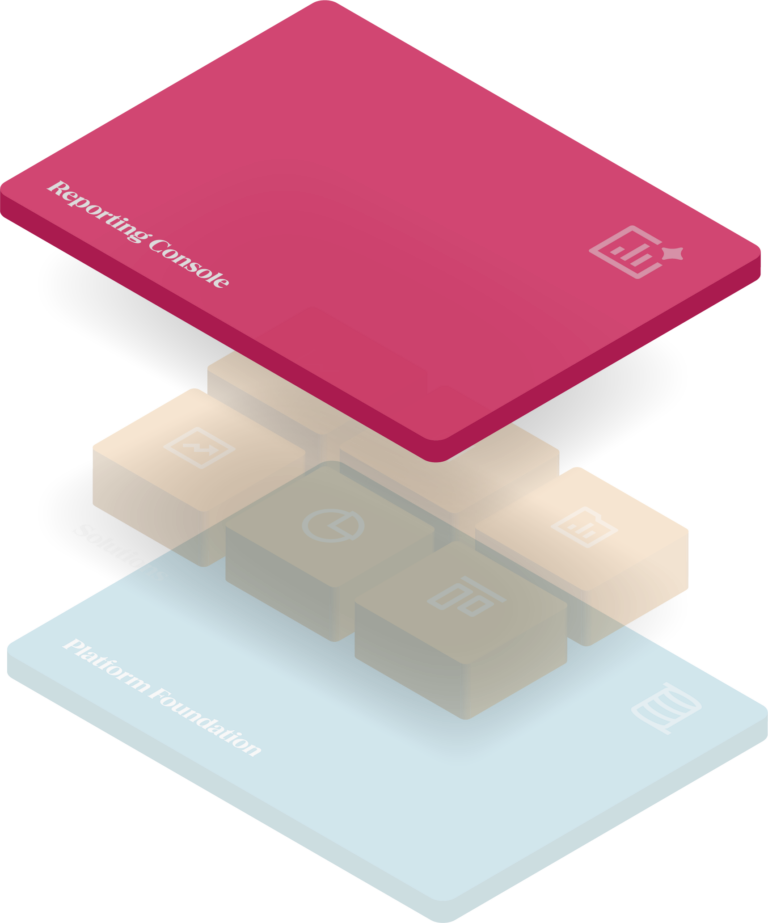
Console runs on the same imported data and actuals already feeding ALM, CECL and Budgeting & Planning inside Empyrean Dataverse. One data foundation means no second import, no separate validation, no reconciliation.
Understand changes daily, not once a month.
GL and instrument data is imported every business day, so dashboards reflect the business now, not as it was at month end.
Owned by Finance, not IT.
Provisioning is admin-managed, with role-based access scoped to the institution, portfolio, branch, region or department. Dashboards follow your own product, region and GL hierarchies. No IT queue. No BI skills required.
Built for the data foundation an AI era requires
Banking is entering an AI era, and Empyrean Solutions is investing in AI-enhanced operations across the platform. Console’s edge is not a model. It is governed, always-current numbers your whole organization can trust, which is the prerequisite for anything AI does to enable you to make better decisions faster.
How Console compares
Most institutions try to answer these questions with some mix of spreadsheet reports, a general-purpose BI tool, and a standalone analytics product. Three tools, three different answers, and each one still leaves a gap. Here is how Console compares.
Same platform, same numbers
Console runs on the same data layer behind your ALM, CECL and Budgeting & Planning models. Dataverse aggregates your core banking instruments, general ledger, and customer and relationship data, imported every business day.
Because Console draws on the same imported instrument and GL data as those models, there is no second import, no separate validation and no reconciliation before your leaders get what they need. Empyrean built the solution for balance sheet intelligence. Console is how the rest of your organization sees the data used in those processes.
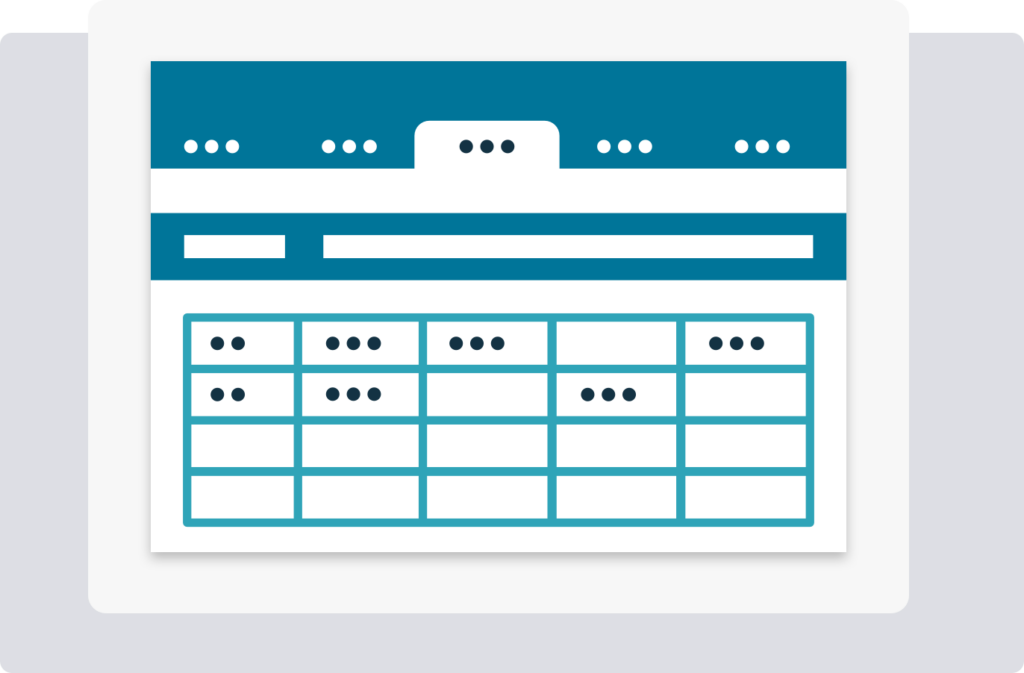

The dashboards are not the breakthrough. Getting them without a BI project is.
Every institution gets the same value from Console: persona specific homepages, dashboards, and record-level details, all built from one shared data foundation. What differs is why you do not have it today. At a community institution, insight like this has meant standing up an entire new solution, with its own data, hierarchies and people to run it. At a regional bank, separate BI and IT initiatives are often already trying to produce it, and either missing what leaders actually need, producing numbers that disagree with another system, or simply taking too long.
Finally, integrated analytics without the BI team
You do not have data scientists, and you should not need them to see portfolio composition and trends, how credit quality is distributed, or daily deposits variances. Insight like this has usually meant standing up a whole new solution: separate data, separate hierarchies, and people to run it.
Console gives your finance and operations teams pre-built dashboards they access themselves, on the same data foundation used to feed Empyrean ALM, Budgeting and Planning and CECL.
Answer your questions the same day
Know your numbers without a build.
Portfolio composition, credit quality, concentration views, deposit trends and GL balance trends are pre-built, so the answer does not start with a configuration project.
You own your numbers.
Explore, filter and drill through your own dashboards without SQL, a BI developer or an IT ticket.
Trace a number to the detail behind it.
Move from a persona home page to a detail page to the individual account, customer or relationship driving the change.
Current every business day.
GL and instrument data is imported daily, with 24 months of month-end trending and day-over-day, MTD, QTD and YTD comparison.
Already on Empyrean? Already connected.
If you run ALM, CECL or Budgeting & Planning on the same platform, that data foundation is already in place for Console.
Built for the team you actually have
No BI team required.
Console is designed for finance and operations people, not data specialists.
Right-sized.
Banking-specific depth without the cost or complexity of enterprise BI.
Every function, not just finance.
Multiple personas mean lending, credit, treasury, deposits, retail and mortgage each open their own view rather than queueing behind whoever has time.
FOR REGIONAL FI AND LARGE FI
One set of numbers every leader trusts. Not five that disagree.
For larger financial institutions, the problem is usually not an absence of capability. Separate BI initiatives and IT teams are already trying to produce these insights, and they are either missing the mark because they do not understand what leaders across the institution actually need, delivering numbers that disagree with another system, or taking so long the question has moved on.
Console replaces that with pre-built dashboards for multiple banking functions, all reading the same data foundation as the rest of your finance stack.
Every function gets its own view.
Pre-built home pages across multiple banking functions, so the CRO is not parsing a CFO dashboard for a risk answer.
Scope access to your structure.
Role-based access assigns each user a persona and a data scope: institution, portfolio, branch, region or department. One user can hold several personas.
No separate stack to stand up.
Console runs on the same imported data already unified in Empyrean Dataverse for ALM, CECL and Budgeting & Planning, so nobody spends the week before a committee meeting reconciling whose numbers are right.
Find the driver, not just the number.
Drill from a persona home page to a domain detail page to customer, instrument and relationship detail, without exporting or re-keying.
Standard dashboards. Your hierarchies.
Configurable product, region and GL hierarchies, with added dimensions for customer and officer segmentation, owned by FP&A.
Refreshed every business day.
GL and instrument data is imported daily, with 24 months of month-end trending, so cross-system questions resolve in one view rather than a week of assembly.
Stronger on the platform. Available on its own.
On the Empyrean platform, Console is the analytics layer over the same imported data driving your ALM, CECL and Budgeting & Planning models, so risk, finance, and leaders from across the institution are all using the same numbers. On its own, Console delivers bank-native persona dashboards, role-based access and drill-down to the record level details. The shared platform is a multiplier, not a requirement.